Burst pipe and leak water damage, dried room by room
Supply lines, water heaters, slab leaks and pipes behind walls. Water out on night one, then dried and measured, with a visit every day until every room reads dry.
Still running or dripping?
Call (310) 857-2520A person answers, day or night.
Already stopped?
Request a free visitAdd photos if you have them.
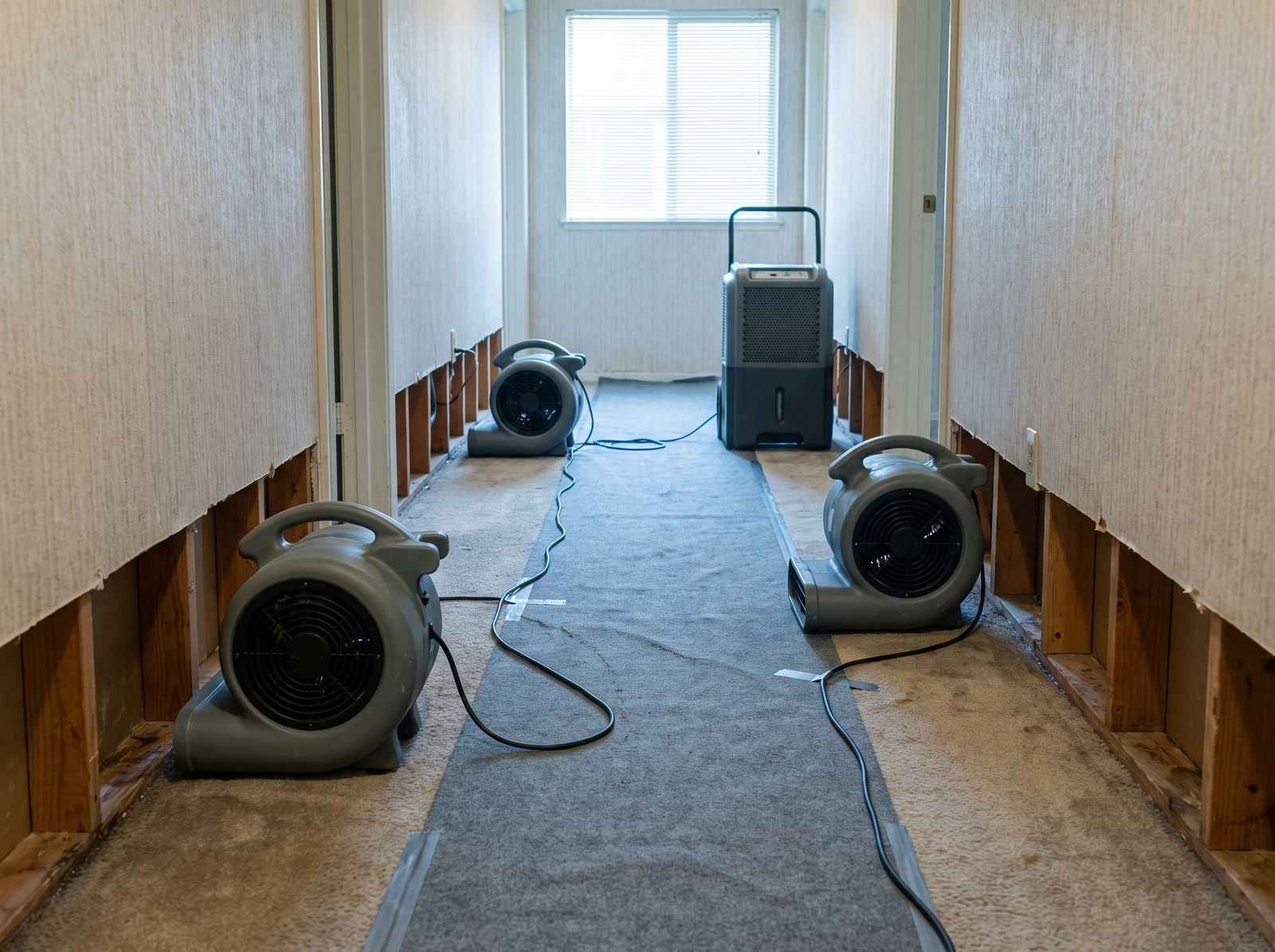
In a Los Angeles home, water damage usually starts with the plumbing. A braided supply line bursts behind a toilet, or the water heater gives out in the garage. The water on the floor is only the start of it. It wicks up the drywall and soaks into the pad under the carpet, and the longer it sits, the more of the room has to come out.
Before the crew gets there
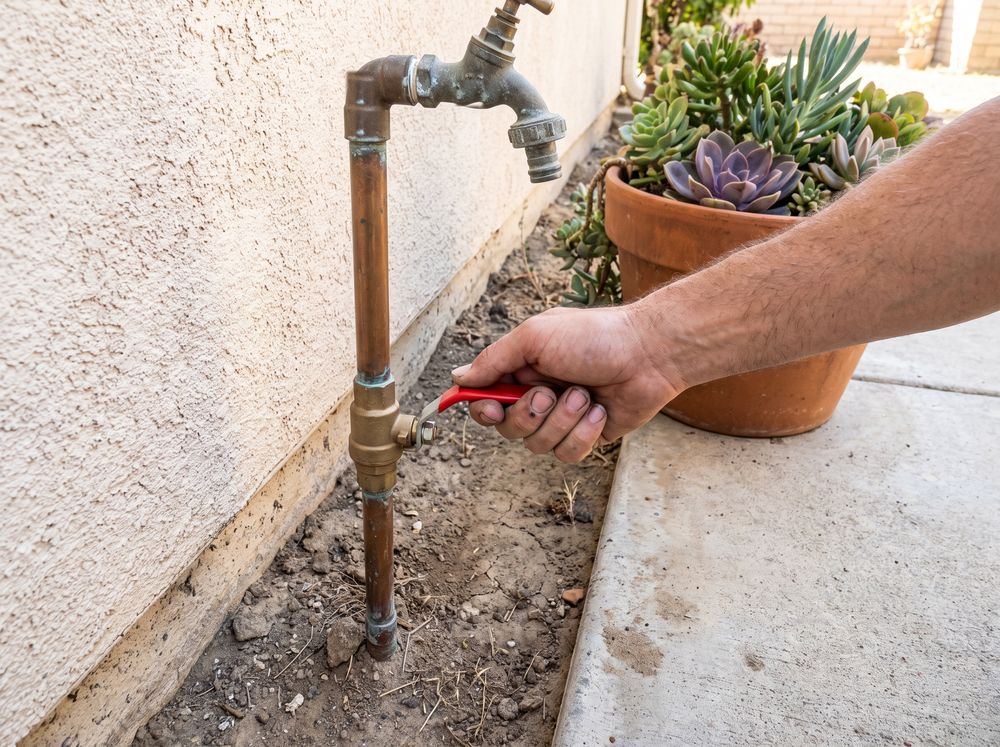
- Close the main valve. In a house it’s usually near the front hose bib. In an apartment, close the valve under the leaking fixture and call your manager.
- If water has reached outlets or cords, keep clear.
- Take photos before you move anything, wide shots of each room first.
- Lift rugs, shoes, boxes and anything with paper in it off the wet floor.
Where it usually starts
- The braided hose under a sink or behind a toilet
- A water heater in a garage, a closet or a utility room
- A washing machine hose or the line to a dishwasher
- A pipe inside a wall, often first seen as paint lifting low on the wall
- A pipe under the slab of a 1950s or 1960s house, where a baseboard stays damp for weeks
- A water main that broke on the street outside
Your first hour
- Now
A person answers and stays on while you close the valve.
- 15 min
Sent a request, or missed us? We call you back.
- 45 min
A crew at your door, timed from the end of your call.
- Visit one
We walk you through the week before the first fan goes on.
Night one to the last visit
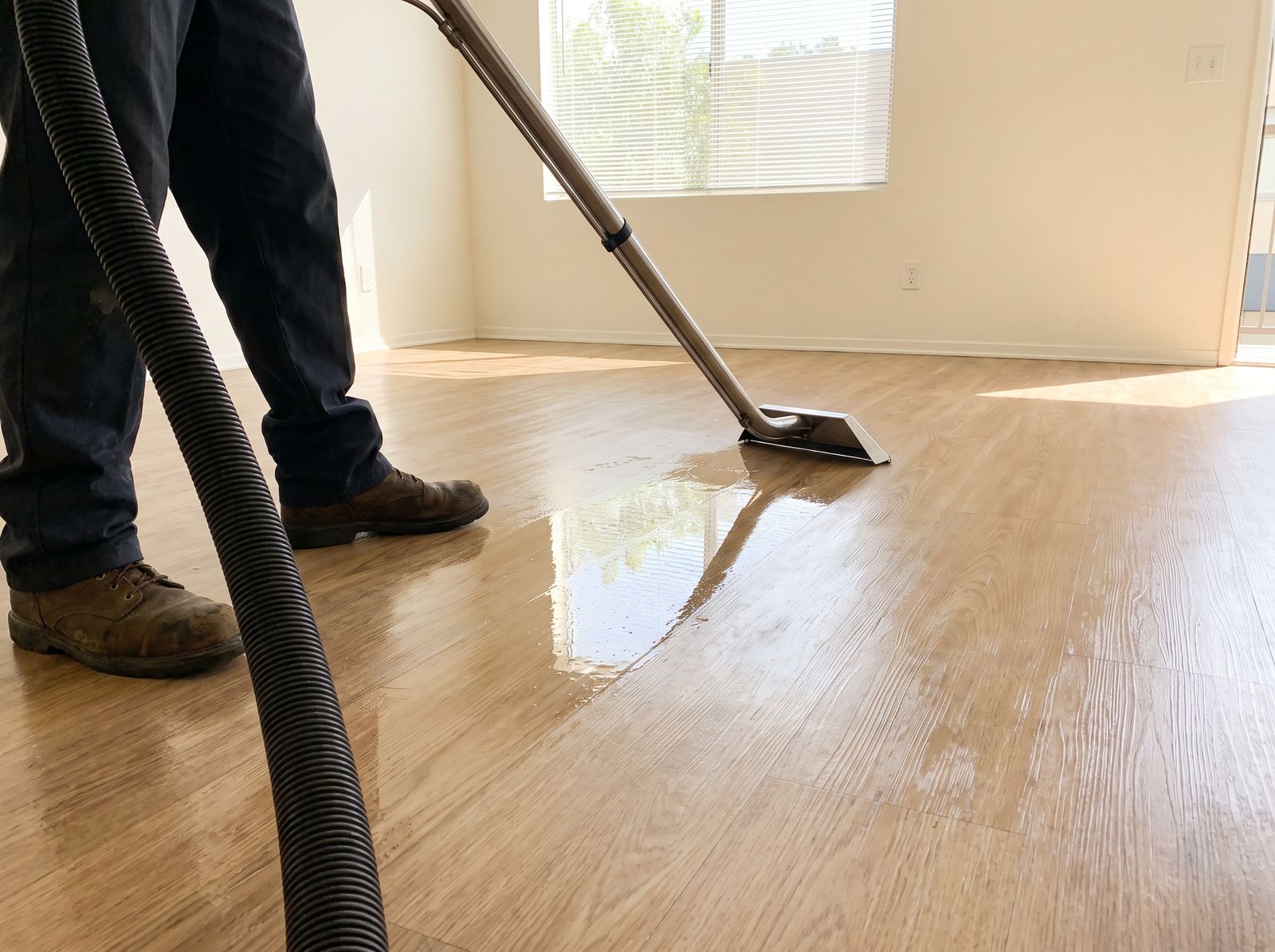
- On night one the water comes out first. Then a moisture meter goes on every wall and floor it reached, and a thermal camera helps show where it has spread behind them.
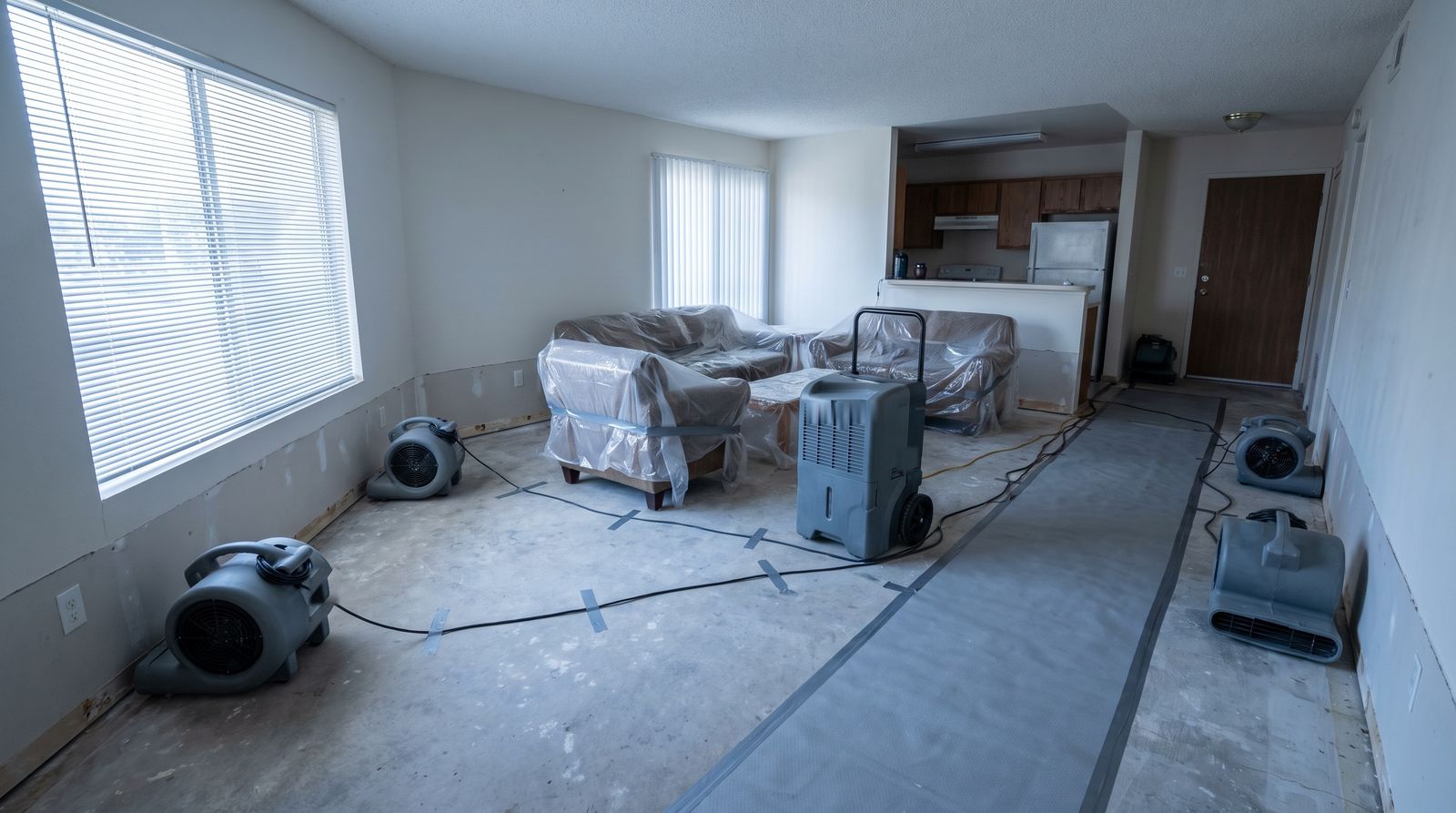
- The air movers and the dehumidifier go where they’ll do the most, and you know the day we expect the equipment to go.
- We come back every day at a time we set together. We test the same marked spots on each visit so the days compare, and move equipment to wherever drying is slowest.
- On the last visit every room reads dry. We go through the final numbers with you, and the equipment comes out after you’ve seen them.
You keep the photos and each day’s numbers, room by room. They are what an adjuster usually asks for.
What the category decides
Restorers sort water into three categories: clean, gray and sewage. A burst supply line starts clean, so drywall, framing and often the carpet can dry where they are. The pad under the carpet usually comes out, because it holds water and costs little to replace. Water that has sat for a few days can turn gray, and then less of it can be saved.
We cut a wall only where it can’t dry where it is. It’s a straight cut low on the wall, and you agree to it before we cut. Once every room reads dry, repairs after drying put back what came out.
Still need a plumber?
The leak itself is a plumber’s job and billed separately. Once it’s stopped, we dry everything it reached. If the water came down from the unit upstairs, water through the ceiling covers how both units are handled.
What changes the total on a drying job
- Whether the water was clean, gray or sewage
- How many rooms it reached, and whether it got under the floor
- What has to come out
- How many days drying takes
- Whether furniture and belongings need moving
Visit one is free. If the water’s still moving when we arrive, we explain the extraction and agree it with you on the spot. You see every price before the work it covers, and you decide whether we go ahead. In most cases we bill your insurer directly. You pay your deductible plus anything your policy excludes. Coverage is your insurer’s decision.
Questions about burst pipes and leaks
Does insurance cover a burst pipe?
Often, when it happened suddenly. Policies usually treat a burst differently from a slow drip that went on for months. Your insurer decides. We photograph and measure everything on night one, so you have what the adjuster asks for.
How long does drying take?
Usually three to five days. On night one we tell you the day we expect the equipment to go. If one room lags, we tell you why. It’s often a cabinet base or a tiled wall.
Is the carpet worth drying?
Often, after a clean-water leak we reach early. The pad usually can’t. After gray water, the pad comes out and the carpet often does too. After sewage, both come out.
Our street’s water main broke. Can you help?
Yes. The utility repairs the main. We dry what it reached inside, and if it reached several houses on the block, each house gets its own numbers.
From the first night to the last repair
Still dripping? Call now.
Already stopped? Request a free visit, with photos if you have them.